Mobilize. Speak out. Demand accountability from your county commissioners today.
Fight Project Tango: Phase 2
We beat the EXPANSION on 7/15/26, now we need to
STOP THE CONVERSION!

The Current Threat: the 2016 Loophole
The PBC Commissioners voted NO to the EXPANSION of Project Tango - which is a huge victory for our community.
But our next battlefront is the ADMINISTRATIVE LOOPHOLE. Developers love using outdated, 2016-era "Data Center" definitions (which were written for silent, low-power server rooms or telecom switches) to sneak in massive, power-hungry, loud AI installations without public oversight.
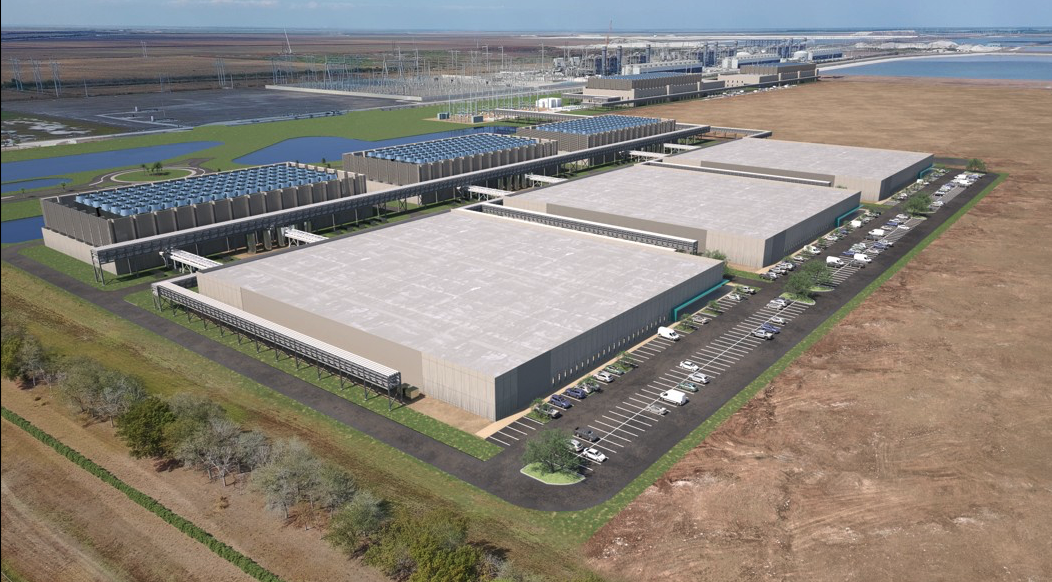
This means that despite our massive victory, the developers are STILL trying to move forward by exploiting a dangerous loophole. They are attempting to use an administrative process to bypass the public entirely, converting their previously approved 1.2 million square feet of warehouse space into a massive data center complex. If left unchecked, county staff can sign off on this conversion with a simple bureaucratic checkbox—completely bypassing the Commission and the public, WITHOUT A SINGLE VOTE OR PUBLIC HEARING.
To force the county to HALT ADMINISTRATIVE APPROVALS and MANDATE PUBLIC HEARINGS, we need to trigger an Emergency Text Amendment or an Administrative Moratorium/Stay while the new code is being written.
In the public hearing on July 15th, the Commissioners clearly stated on the record that they agreed AI Data Centers are NOT the same as Data Centers of the past, specifically that which existed in 2016. They acknowledged that new code needs to be written - and we need to make sure they do that, with restrictions specifically around DISTANCE FROM RESIDENCES AND SCHOOLS before the developers try to convert their existing warehouse space (1.2 million square feet) into a massive AI Data Center.
The Strategy: How to Freeze the Administrative Loophole
Because administrative approvals are handled by county staff (not elected officials), we must get the Board of County Commissioners (BCC) to formally direct the Zoning/Planning Director to halt all pending data center applications under the current code.
We have two primary mechanisms:
Request an Emergency Moratorium on Data Center Administrative Approvals: Argue that the current 2016 Unified Land Development Code (ULDC) definition of a "Data Center" is fundamentally obsolete and fails to protect public health against modern hyperscale AI infrastructure.
Enforce the Commissioners' Hearing Record: Remind them that during the Project Tango hearing on 7/15/26, the Board explicitly acknowledged on the record that AI data centers are completely new and different. If staff approves a Project Tango-style site administratively using an obsolete definition, they are actively undermining the expressed legislative intent of the Commissioners.
The Argument
The Argument: A 2016 data center was essentially an office building filled with computers. A 2026 AI data center is an industrial power-and-cooling plant.
The Evidence: A side-by-side comparison showing the structural differences:
2016 Traditional Data Center
Power Density: 3-5 kW per rack
Cooling Demand: Standard HVAC (closed system)
Acoustic Profile: Ambient indoor noise
Zoning Alignment: Light Industrial / Office Park
2026 AI Hyperscale Data Center
Power Density: 40-100+ kW per rack (massive grid strain)
Cooling Demand: Hundreds of high-velocity chiller fans
Acoustic Profile: Continuous low-frequency dBC hum (24/7)
Zoning Alignment: Heavy Industrial Processing Plant
Precedent from Other Jurisdictions
Show the Commissioners that updating the code and halting administrative approvals is standard practice across the country right now. Palm Beach County DOES NOT NEED TO REINVENT THE WHEEL, THIS IS ALREADY BEING DONE IN OTHER AREAS OF THE COUNTRY.
The Evidence: Other counties have recently stripped administrative approval rights for data centers due to noise and power constraints. For example, Fairfax County and Prince William County in Virginia recently overhauled their zoning ordinances specifically to remove "by-right" (administrative) data center approvals and mandate Comprehensive Sign and Special Exception public hearings for all data centers within certain distances of residential zones.
1. Prince William County, Virginia
The Action: In 2026, the Prince William County Board of Supervisors initiated a sweeping Zoning Text Amendment (ZTA) specifically aimed at eliminating the "by-right" (administrative) status of properties within its Data Center Opportunity Zone Overlay District.Planning Commission Resolution Prince William County
The Specifics: For nearly a decade, developers in designated zones could build or convert spaces into data centers via a streamlined administrative check-box process. Under the new 2026 framework, the county closed and drastically shrank the overlay boundaries. Crucially, any new data center proposals or conversions within light industrial (M-2), heavy industrial (M-1), and office/flex districts must now proceed through a mandatory Special Use Permit (SUP) process.Planning Commission Resolution Prince William County + DPA2021-00020 (Data Center Opportunity Zone Overlay District Comprehensive Review)
This structural shift establishes the SUP as the primary pathway for new data center development outside the DCOZOD, redefining the intent, function, and regulatory weight of the Overlay boundary.
The Outcome: This structural shift completely stripped county staff of the power to hand out administrative approvals. It legally mandated that all data center conversions face discretionary legislative approval by the Board, guaranteeing a public hearing and community input. Venable LLP (Law Firm)
2. Fairfax County, Virginia
The Action: Fairfax County authorized strict new updates to its Zoning Ordinance explicitly designed to curb the rapid growth of data centers that were bypassing public scrutiny via legacy "by-right" clauses.
The Specifics: The county's Board of Supervisors moved to restrict by-right development and mandate Special Exception approvals for data centers, particularly those crossing specific size thresholds or sitting within close proximity to residential zones. Furthermore, Fairfax enacted aggressive new design and environmental reviews, including mandatory setbacks, larger diesel generator buffer zones, and strict acoustic boundaries.Inside America's Data Center Buildout + Fairfax County Zone Ordinance Memorandum
The Substations Catch: In December 2025, Fairfax took it a step further by adopting an amendment that drastically increased setbacks and limits on the utility substations associated with data centers, taking away the administrative "by-right" pathway for the high-voltage infrastructure that data centers rely on.
The Public Health & Acoustic Inevitability
BeThe Public Health and Acoustic Inevitability Argument
The Core Conflict
The primary threat of a warehouse-to-data-center conversion lies in the technical blindness of the current administrative review process. Palm Beach County's 2016 Unified Land Development Code (ULDC) was built for an entirely different era of light commercial use. Because county administrative staff are bound to follow the exact letter of an obsolete code, they are legally forced to ignore the most destructive environmental impact of a modern AI data center: low-frequency industrial noise.
The Loophole: dBA vs. dBC Metrics
The Deceptive Metric (dBA): The current county code evaluates noise limits using the A-weighted decibel (dBA) scale. This scale mimics human speech frequencies and deliberately filters out and ignores low frequencies. A developer can pass a dBA check-box test with flying colors while still emitting massive environmental noise.
The Hidden Reality (dBC): Hyperscale AI data centers require hundreds of high-velocity industrial chillers that roar 24/7 in the C-weighted decibel (dBC) spectrum—the low, heavy, vibrating bass frequencies.
The Physical Failure of Barriers: While high-pitched noises are easily blocked by standard concrete neighborhood walls or residential impact glass, low-frequency sound waves have macro-wavelengths up to 50 feet long. They bend over walls, pass directly through concrete block, and vibrate inside the human skull and home interiors. These waves travel for MILES. Without advanced engineering at the source, the acoustic invasion of our homes is entirely inevitable.
The Public Health Liability
Decades of peer-reviewed neurological and biological research confirm that chronic, inescapable low-frequency noise is not a minor annoyance—it is a toxic neurostressor.
By constantly penetrating the sanctuary of the home, this permanent industrial hum prevents deep REM sleep, suppresses melatonin, and forces the human nervous system into a continuous, low-grade 'fight-or-flight' survival response. According to World Health Organization (WHO) environmental data, long-term exposure to this specific industrial sleep and stress disruption directly causes:
Chronic elevated cortisol and severe clinical anxiety.
Impaired childhood brain and cognitive development.
A starkly increased epidemiological risk for cardiovascular disease, strokes, immune dysfunction, and certain types of cancer.
A Violation of the County Mandate
Under the Florida Constitution and the opening charters of Palm Beach County, the Board of County Commissioners holds a non-delegable duty to protect the public health, safety, and general welfare of its citizens.
The Structural Breakdown: Because the 2016 code completely lacks a localized low-frequency (dBC) threshold or a tonal "pulsing hum" standard, the administrative review process is mathematically blind to these hazards. Allowing county staff to greenlight a 1.2 million-square-foot industrial utility based on an obsolete checklist directly forces an unmitigated health hazard into residential boundaries.
An administrative approval of this industrial conversion is a clear violation of the county's mandate to protect its people.
Take Action: Citizen Mobilization Kit
Community Action Letter Template: a copy and paste text block for emails and physical letters
Why physical letters IN ADDITION to emails? Commissioners get flooded with hundreds of emails a day, and it is incredibly easy for an assistant to bulk-archive them into a single folder.
When a physical, hand-signed letter arrives on a commissioner's desk, it has a completely different psychological and bureaucratic impact. Here is why doing both is a critical strategy:
1. The Legal "Paper Trail" Requirement
By mailing physical letters via USPS (or hand-delivering them to the clerk), you are officially entering these documents into the permanent public record for any future land-use lawsuits. If the county staff tries to sneak an administrative approval through later, they cannot claim they weren't warned about the specific health and legal liabilities.
2. Bypassing the Digital Spam Filters
Physical mail in government offices must be opened, sorted, and logged by administrative assistants. When a stack of identical letters from the same ZIP code lands on a commissioner’s desk, it creates physical clutter that serves as a constant, visual reminder of our community's voting power.
3. The Two-Pronged Mobilization Strategy
Step 1 (The Speed Wave): Copy/paste the email template, add your name, and send it immediately. This creates instant digital noise.
Step 2 (The Heavy Wave): Print out 8 copies of the physical letter, sign it in blue ink, and drop it in the mail to the main governmental center downtown.
[Commissioner's Name]
Palm Beach County Governmental Center
301 N. Olive Avenue, 12th Floor
West Palm Beach, FL 33401
The Email List Checklist
District 1: Maria G. Marino (MMarino@pbc.gov)
District 2: Gregg K. Weiss (GWeiss@pbc.gov)
District 3: Michael A. Barnett (MBarnett@pbc.gov)
District 4: Marci Woodward (MWoodward@pbc.gov)
District 5: Maria Sachs (MSachs@pbc.gov)
District 6 (Your District - Arden/The Acreage): Sara Baxter (SBaxter@pbc.gov) — Target her heavily; she is your direct representative!
District 7: Mack Bernard (MBernard@pbc.gov)
PZB Executive Director: Whitney Carroll (WCarroll@pbc.gov) — Crucial because she oversees the administrative staff.
Explore a fortress of peer-reviewed data that strips the developer of any ability to claim our residents are making "passionate" or emotional arguments.